
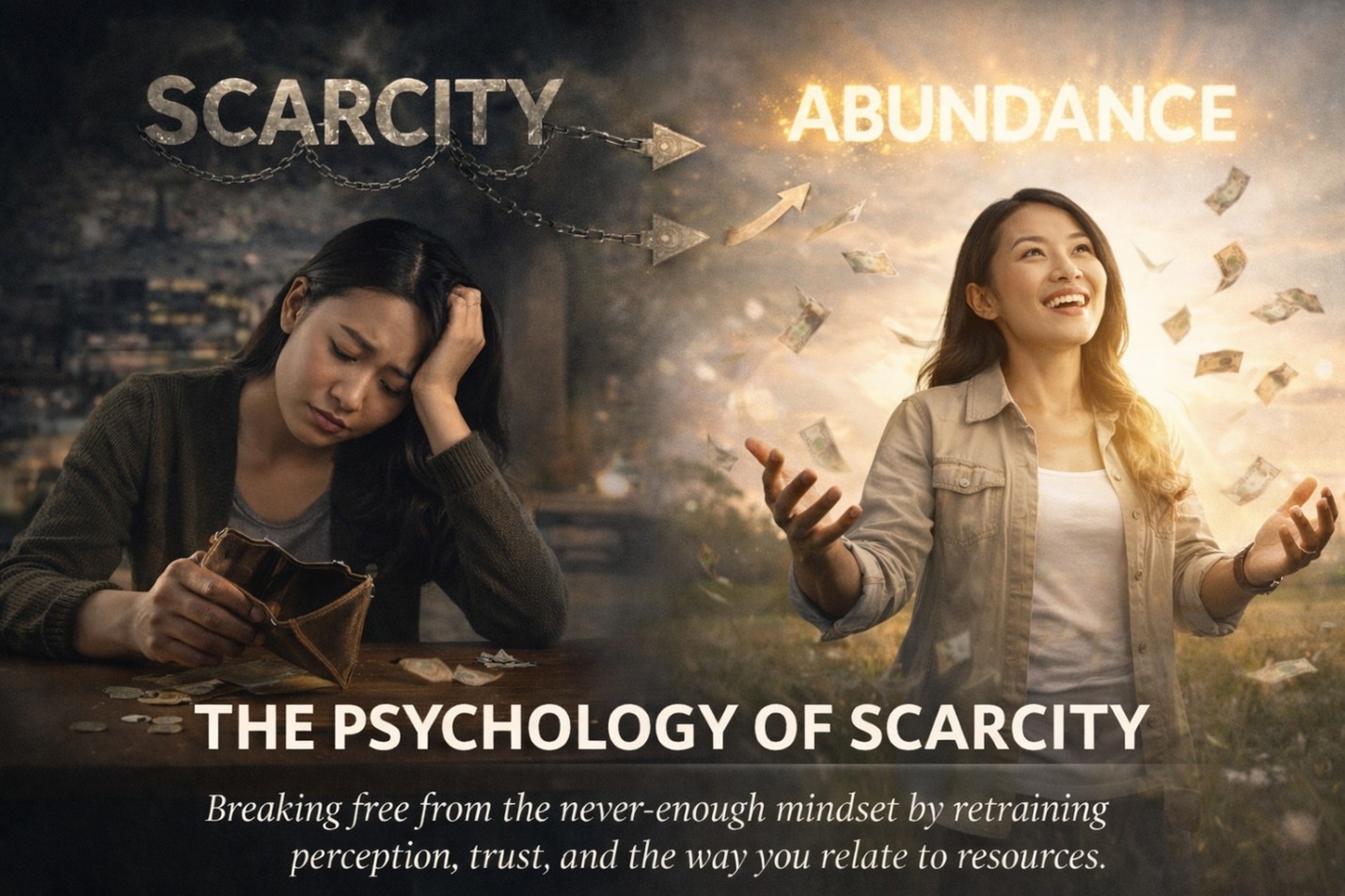
Scarcity is often less about mathematics and more about perception. People can have provision in front of them and still feel haunted by shortage.
When people feel that a resource is limited, whether time, money, or opportunity, the brain narrows its focus. Attention locks onto the perceived shortage, and the very mindset that seeks safety begins to reduce the capacity needed to move beyond pressure.
The sense of not having enough often originates in perception rather than reality.
Retraining the internal lens
How Scarcity Shapes the Mind
Scarcity mindset creates tunnel vision. It can temporarily increase focus on the immediate problem, but it also drains mental capacity. Planning becomes harder. Long-term thinking weakens. Self-control becomes more difficult. In this way, scarcity quietly reduces the very abilities needed to escape it.
At the core of this mindset lies a deeply ingrained assumption that ownership creates security. When people believe everything belongs to them and must be protected, every loss feels threatening and every expense feels like personal diminishment.
Abundance thinking develops through disciplined practices, not vague optimism.
From Ownership to Stewardship
A different perspective emerges through deeper spiritual reflection. Resources are not ultimately owned. They are entrusted for a season. From this viewpoint, giving becomes movement toward purpose rather than subtraction from the self, and loss becomes a change in stewardship rather than a collapse of identity.
When identity is anchored in relationship with the Creator, security no longer rests in possessions. People begin to interact with resources more freely. Generosity becomes easier. Planning becomes calmer. Gratitude grows stronger than anxiety.
Practices That Loosen Scarcity
Abundance thinking does not appear automatically. It develops through deliberate practices that reshape attention and belief. Gratitude trains the mind to notice what is already present. Generosity reinforces the experience of having enough to share. Contentment cultivates satisfaction with the portion already received.
Trust gradually releases the illusion that control guarantees security. Over time these disciplines loosen the grip of scarcity thinking and restore a healthier relationship with resources. The result is not denial, but clearer sight.